
If you’re over 65, strength training isn’t about chasing muscle for the sake of it. It’s about staying independent, mobile, and confident in everyday life.
When you choose the right exercises, you can slow down and in many cases reverse age-related muscle loss. You don’t need dozens of movements or complicated gym routines. You need a small number of exercises that work multiple muscles at once, are safe to perform at home, and carry over to real life.
Below are the five dumbbell exercises I’d prioritise for adults over 65, along with simple progressions so you can meet your body where it’s at.
DISCLAIMER: The information in this post is not a substitute for individualized medical advice and the exercises are not suitable for every person. Please get checked out before you start any new exercise programme.
1. Goblet Squat (Beginner → Advanced)
This may be the most underrated strength exercise there is.
The goblet squat trains your quads, glutes, core, and back all at the same time – muscles you rely on for standing up, walking, and climbing stairs.
Beginner: Goblet Sit-to-Stand
- Sit on a sturdy chair
- Hold a dumbbell (or a bag of books) close to your chest
- Feet back underneath you
- Lean forward slightly and stand up
- Sit back down slowly
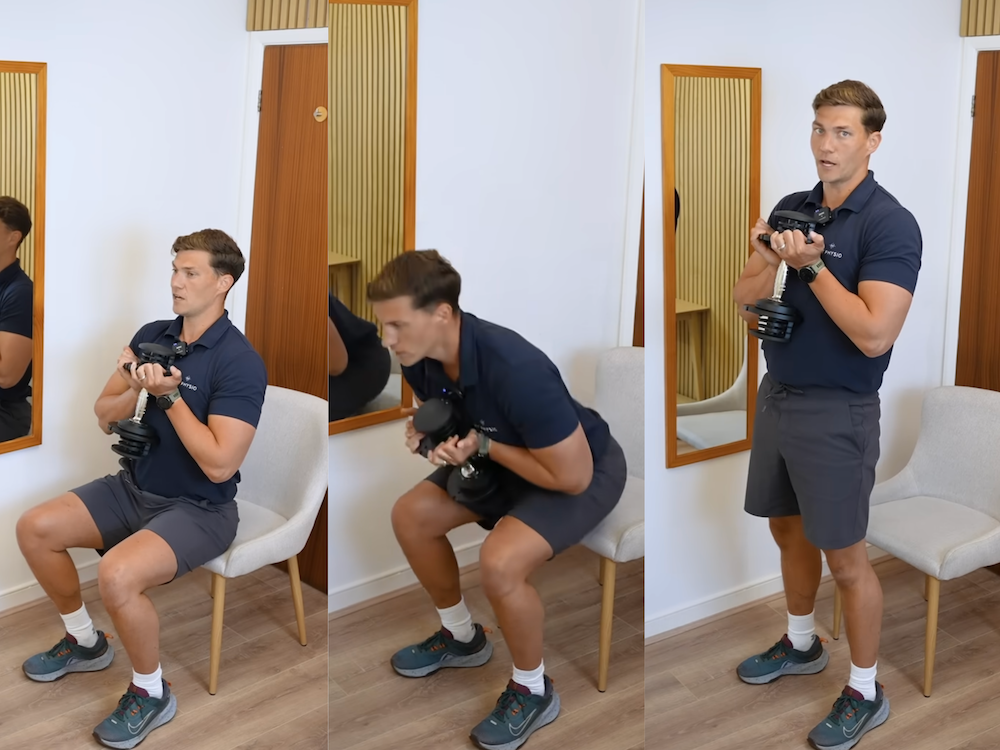
Progression:
Instead of fully sitting, lightly touch the chair and stand back up.
👉 If you can do 15 reps comfortably, move on.
Intermediate: Full Goblet Squat
- No chair
- Hold the weight at chest height
- Sit back and squat as deep as feels comfortable
- Keep your back tall
Advanced: Pulsed Goblet Squat
- Squat down
- Come halfway up
- Lower again
- Stay controlled
This outer-range pulsing strongly challenges the quads and glutes.
Programming:
👉 10–20 reps, 3 sets, resting 1–2 minutes between sets.
2. Romanian Deadlift (RDL)
One of the safest and most effective strength exercises, especially important for people concerned about bone health.
The Romanian deadlift is a hip hinge, not a spine bend. That makes it a great option for strengthening the back, hips, hamstrings, and grip while keeping the spine neutral.
How to Do It:
- Hold two light dumbbells against the front of your legs
- Soft bend in the knees
- Push your hips back while keeping your back straight
- Lower until you feel a stretch in the hamstrings
- Slowly return to standing
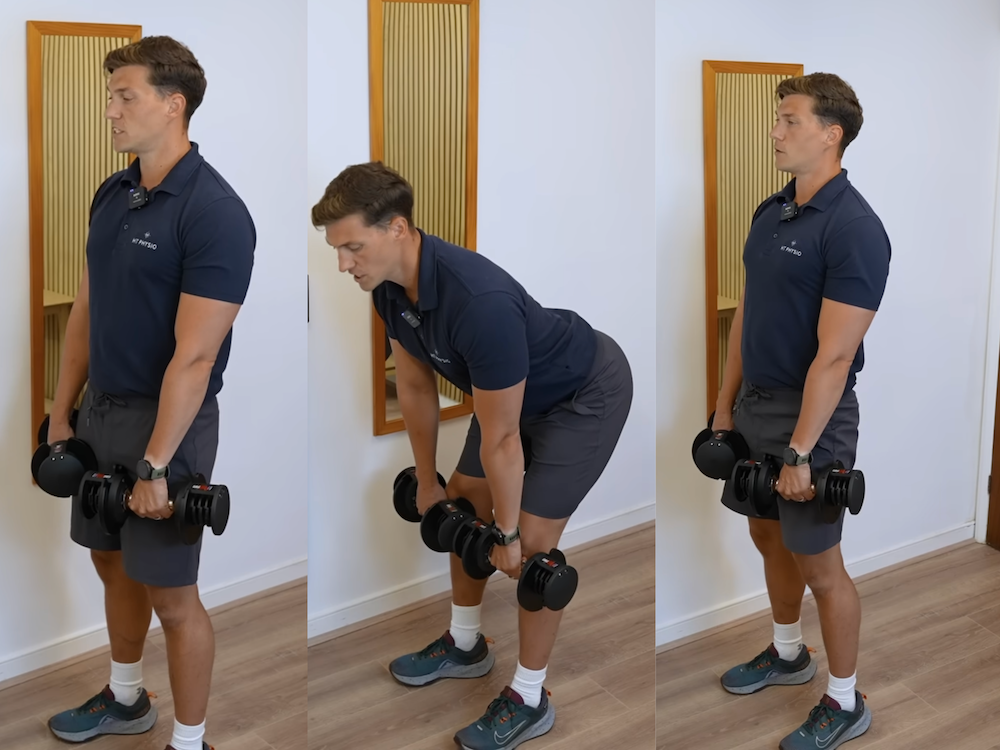
Move slowly: about 4 seconds down, 2 seconds up.
You should feel this in your legs and hips, not your lower back.
Programming:
👉 8–15 reps, 3 sets.
3. Step-Ups
As we age, stair strength disappears faster than we realise – and when it’s gone, daily life gets much harder.
Step-ups recreate and strengthen the exact movement needed for stairs, hills, and kerbs.
How to Do It:
- Use the bottom stair or a low step
- Hold dumbbells at your sides
- Step up with one leg
- Bring the other foot up
- Step back down slowly
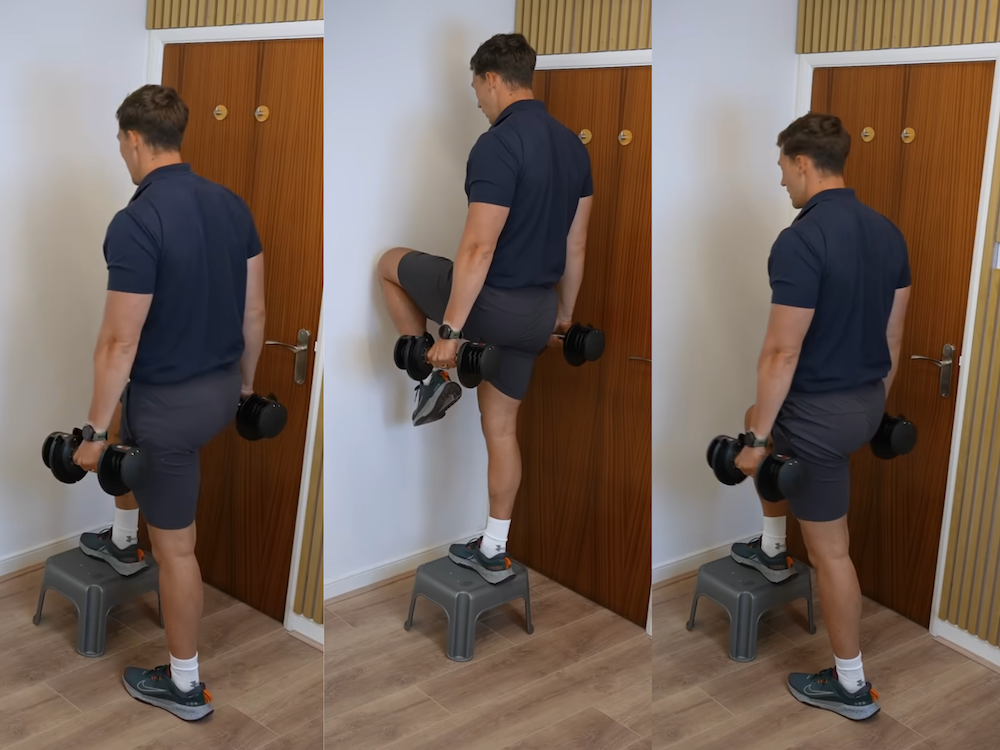
Do all reps on one leg first, then switch.
Focus on keeping your pelvis level, don’t let it drop to one side.
Programming:
👉 10–15 reps per leg, 2–3 sets.
4. Dumbbell Row
Pulling strength often gets overlooked – until lifting shopping bags, housework, or posture becomes difficult.
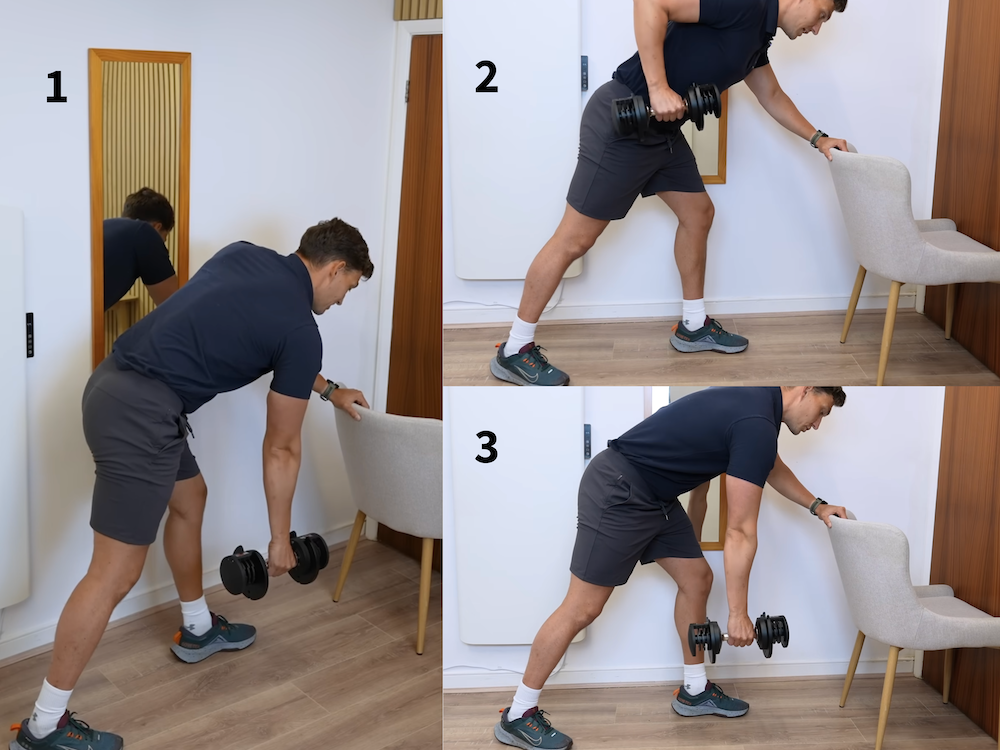
The dumbbell row strengthens the upper back, shoulders, arms, and grip, all essential for daily tasks.
How to Do It:
- One hand on a chair for support
- Dumbbell in the opposite hand
- Let the arm hang
- Pull the weight toward your waist
- Squeeze the shoulder blade
- Lower with control
Keep your body still, the movement comes from the arm and shoulder blade.
Programming:
👉 10–15 reps per arm, 3 sets.
5. Squat and Press (Full-Body Finisher)
This is the “everything at once” exercise.
The squat and press trains legs, core, back, shoulders, and arms in one smooth movement – ideal if you’re short on time.
How to Do It:
- Hold dumbbells at your sides
- Bring them up to shoulder height
- Squat down
- As you stand up, press the dumbbells overhead
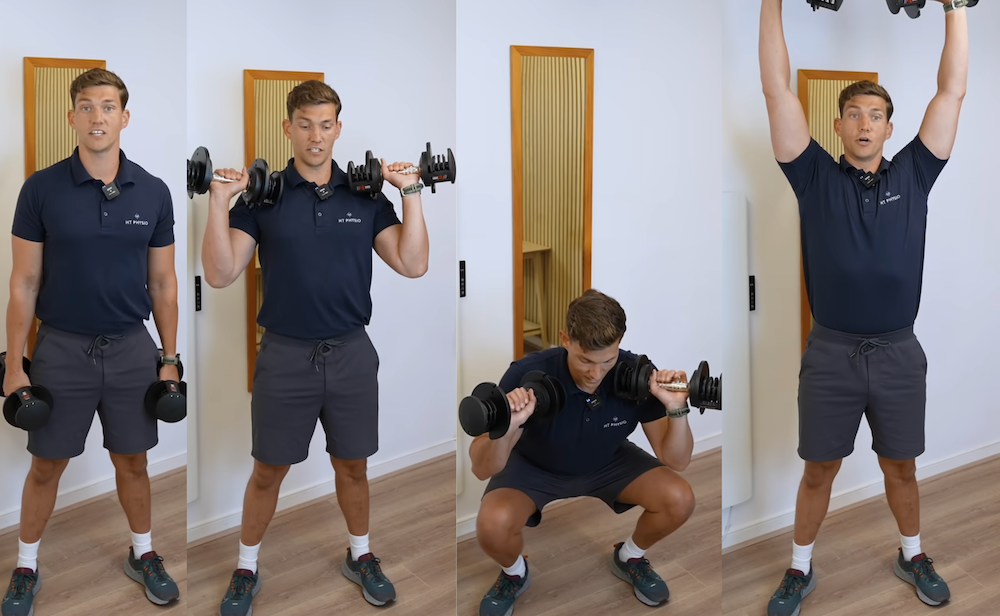
Think: legs drive first, arms finish second.
Keep your back tall and movement controlled.
Programming:
👉 10–15 reps, 3 sets.
How to Use This Routine
You don’t need to do all five exercises every day.
A simple approach:
- Train 2–3 times per week
- Pick 3–5 exercises per session
- Focus on good form, not speed
- Increase weight only when reps feel controlled
Consistency matters more than intensity.
Final Thought
Strength after 65 isn’t about pushing limits – it’s about choosing movements that give you the biggest return for your effort.
These five exercises cover:
- Legs
- Hips
- Core
- Upper body
- Grip
And most importantly, they support the movements that keep you independent for life.
Author:
Will Harlow, MSc, MCSP
Over-50s Specialist Physiotherapist, HT Physio – Farnham, UK
If you’d like more structured guidance, check out my book Thriving Beyond 50, packed with safe, practical ways to build strength, mobility, and confidence after 50.