
Your knees don’t hurt because you are getting older, they hurt because these 4 muscles aren’t supporting them anymore.
If you’ve been told that knee pain is just “wear and tear” or something you have to accept with age, you’re not alone.
After treating hundreds of adults over 50, I’ve learned this: Strong knees are built with support from every angle.
When certain muscles stop doing their job, the knee joint takes more stress than it was designed to handle. The good news is you can rebuild that support, safely and effectively, at almost any age.
Why Most Knee Pain Advice Makes Things Worse
Most people try to manage knee pain by:
❌ Avoiding walking, stairs, or exercise
❌ Stretching the knee endlessly
❌ Copying workout routines designed for younger athletes
The problem is that none of these actually make the knee stronger.
In fact, avoiding movement often causes the muscles that protect the knee to weaken further, leading to more pain, more instability, and less confidence over time.
What Actually Builds Strong Knees After 50
Here’s the reframe most people miss:
Strong knees are supported from every angle.
That means:
- Strength above the knee
- Strength below the knee
- Strength behind the knee
When those areas work together, the knee joint is no longer forced to cope on its own.
The following four exercises target exactly that.
Exercise 1: Knee Extensions
Why they matter:
Your quadriceps stop the knee from buckling when you walk, stand, or go downstairs.
Weak quads = pain, instability, and loss of confidence.
How to do them:
- Sit upright in a chair
- Slowly straighten one knee
- Squeeze the thigh at the top
- Lower with control
👉10-15 reps per side, 1–2 sets
This exercise is excellent for rebuilding the mind–muscle connection, which often fades with pain and inactivity.
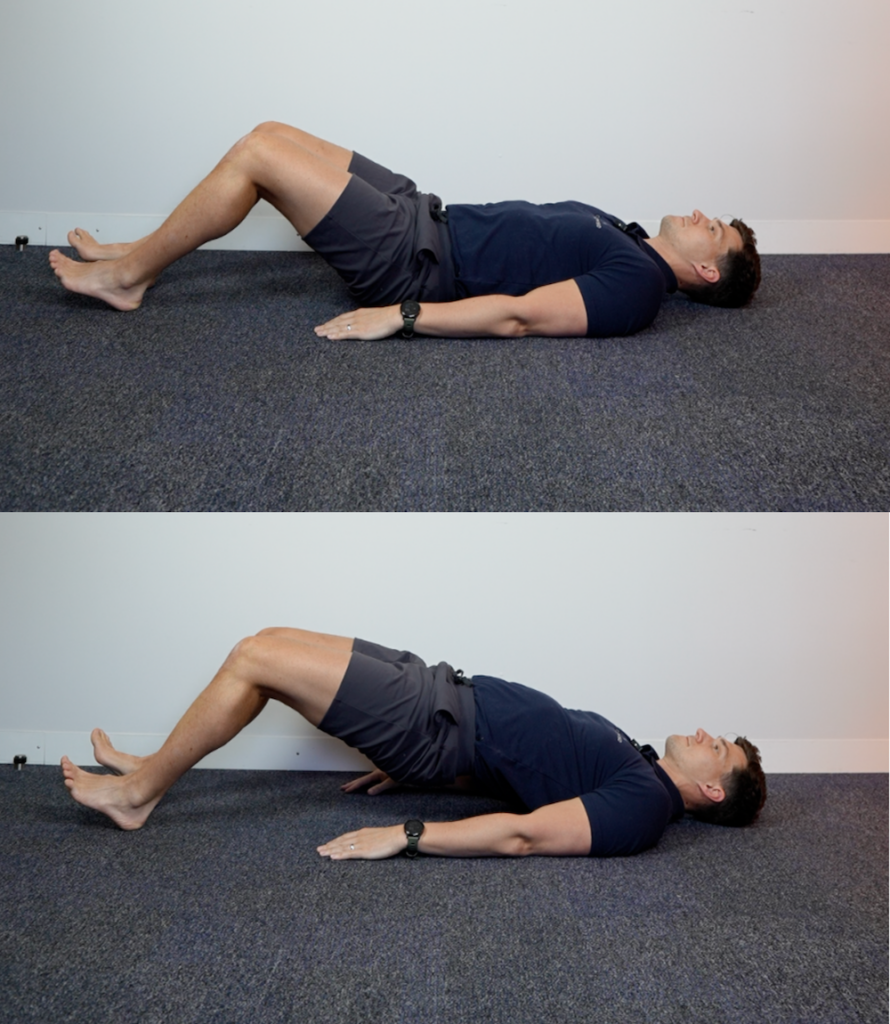
Exercise 2: Hamstring Bridges
Why they matter:
Your hamstrings help stabilise the knee every time you walk.
Weak hamstrings = wobbly, unpredictable knees.
How to do them:
- Lie on your back with knees bent
- Lift your pelvis up into the air, tensing the muscles at the back of your thigh
- Lower slowly
👉10 reps
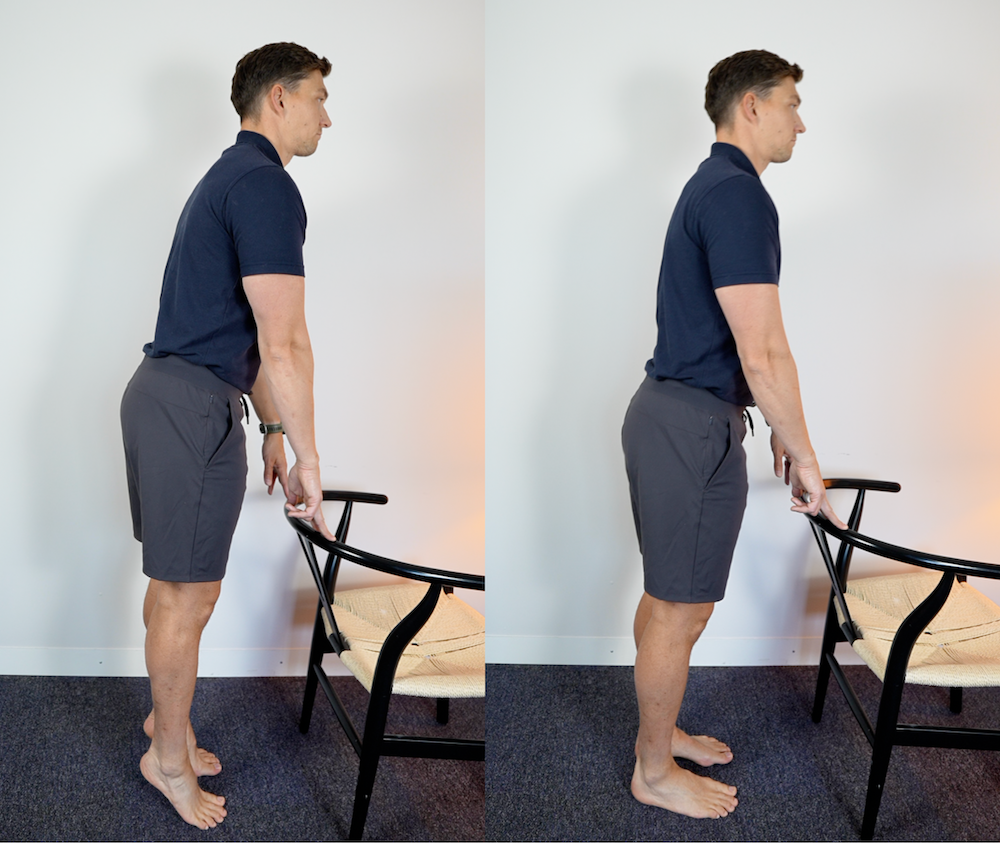
Exercise 3: Calf Raises
This one surprises a lot of people.
👉 Your calf muscle crosses the knee joint.
If your calves are weak or tight, the knee quietly takes extra load, especially when walking or climbing stairs.
How to do it:
- Hold onto support if needed
- Rise up onto the balls of your feet
- Slowly lower yourself back down
👉Build to 10 reps per side
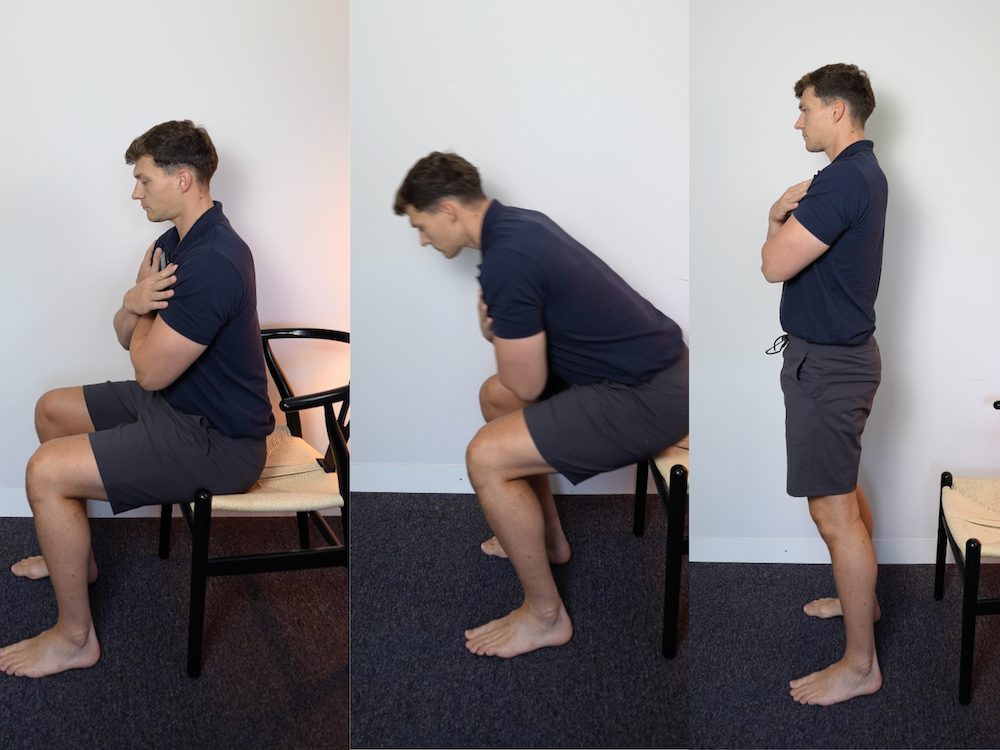
Exercise 4: Sit-to-Stand (Real-Life Knee Strength)
This is where everything comes together.
This movement trains:
- Getting up from chairs
- Using stairs
- Confidence on one leg
How to progress:
- Start with both feet evenly placed
- Move to staggered feet
- Progress to single-leg sit-to-stands
👉5–10 reps per side. Only progress when pain feels controlled
This is knee strength that actually transfers to daily life.
Your Simple 10–12 Minute Knee Routine
You don’t need long workouts or fancy equipment.
Do this 3× per week:
- Knee extensions: 10–15 reps
- Hamstring bridges: 10–15 reps
- Calf raises: 10–15 reps
- Sit-to-stands: 5–10 reps per side
Consistency beats intensity every time, especially after 50.
Author:
Will Harlow, MSc, MCSP
Over-50s Specialist Physiotherapist, HT Physio – Farnham, UK
If you’d like more structured guidance, check out my book Thriving Beyond 50, packed with safe, practical ways to build strength, mobility, and confidence after 50.