
Waking up at night with sudden, painful leg cramps is a very common complaint, especially as we get older. Many people tell me they’re being woken three, four, or even five times a night by cramps in the calves, hamstrings, or thighs, leaving them exhausted the next day.
I’m Will Harlow, an over-50s specialist physiotherapist at HT Physio in Farnham. In this article, I’ll share five practical strategies that often help reduce night-time leg cramps. These are approaches I regularly discuss with clients, particularly those who prefer to avoid medication where possible.
DISCLAIMER: The information in this post is not a substitute for individualised medical advice, and the exercises are not suitable for every person. Please get checked out before you start any new exercise programme.
Why Are Night-Time Leg Cramps So Common?
Leg cramps can have many contributing factors, including muscle fatigue, reduced flexibility, hydration and electrolyte balance, posture during sleep, and certain medical conditions or medications.
1. Gentle Stretching During the Day
One of the most helpful strategies for many people is regular stretching of the leg muscles during the day, rather than only reacting to cramps at night.
A 2020 study looked at older adults with frequent night-time leg cramps. Half the group followed a simple stretching routine three times a day for just a few minutes each time. Compared to the control group, they reported fewer cramps and reduced cramp intensity at night.
Below are three stretches that are commonly helpful, provided they are pain-free and suitable for you.
Calf Stretch
This is particularly useful for people who cramp in the calves.
- Stand facing a wall and place your hands against it.
- Step one leg back, keeping both feet pointing forward and both heels on the ground.
- Keep the back leg straight and bend the front knee.
- You should feel a gentle stretch in the calf of the back leg.

👉 Hold for 30 seconds, then swap sides. Aim for a stretch intensity of around 5 out of 10 – never painful.
Hamstring Stretch (Back of the Thigh)
This stretch can help if cramps tend to affect the back of the thigh.
If you have sciatica, this stretch may not be appropriate, as it can sometimes worsen symptoms.
- Sit on the edge of a chair with one foot flat on the floor.
- Extend the other leg straight out in front with the foot relaxed.
- Sit upright, then gently hinge forward from the hips, keeping your back straight.
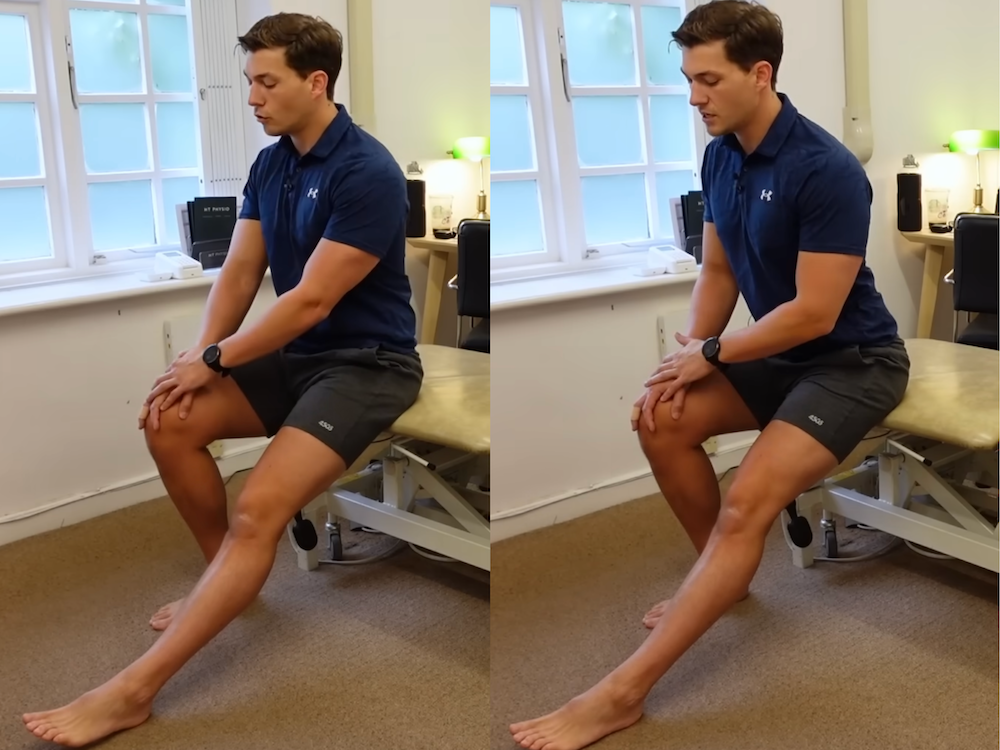
You should feel a stretch down the back of the thigh, without pins and needles or numbness.
👉 Hold for 30 seconds and repeat on both sides.
Quadriceps Stretch (Front of the Thigh)
This stretch can help if cramps affect the front of the thigh.
- Lie on your side on a bed.
- Bend the top knee and gently bring the leg back until you feel a stretch at the front of the thigh.
- Keep your pelvis and lower back relaxed to avoid arching.
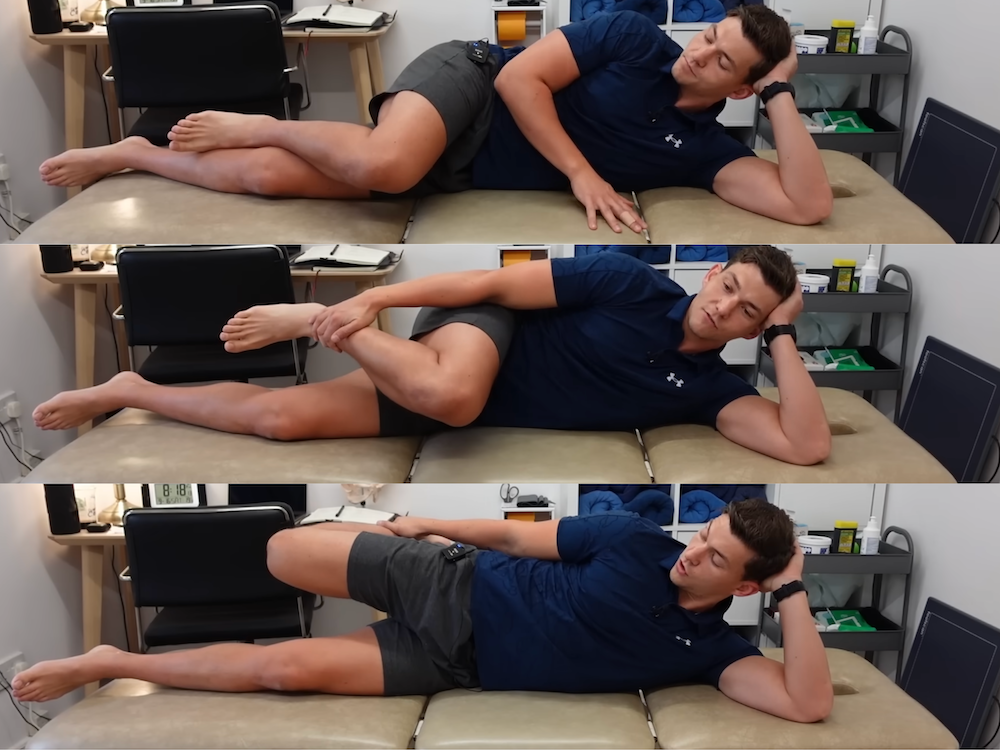
👉 Hold for 30 seconds, then switch sides.
If bending the knee is uncomfortable, a towel around the lower leg can help reduce strain. If knee pain is significant, skip this stretch and speak with a professional.
2. Find a Healthy Balance With Fluid Intake
Hydration plays a role in cramping, but more is not always better.
- Too little fluid can increase the risk of cramps.
- Too much plain water can dilute electrolytes such as sodium and potassium, which muscles rely on to contract and relax properly.
For some people, maintaining a more balanced intake rather than constantly “topping up” with water can help. In certain cases, adding a low-dose electrolyte supplement (containing sodium, potassium, and magnesium) may support better balance, especially if you drink a lot of fluids.
This will vary from person to person.
3. Consider a Magnesium Rub
Some people find that applying a magnesium-based cream or oil to the areas prone to cramp before bed is helpful.
The evidence for magnesium absorption through the skin is mixed, and this remains a debated area. However, anecdotally, many clients report reduced cramp frequency or severity when using a topical magnesium product.
If you try this:
- Apply it to clean skin
- Stop if you notice any irritation or sensitivity
4. Avoid Eliminating Salt Completely
Reducing salt intake is important for many people, particularly those with high blood pressure. However, completely eliminating salt can sometimes contribute to cramping.
Sodium is an essential electrolyte involved in fluid balance and muscle function. While we don’t need large amounts, having none at all can increase the risk of muscle cramps for some individuals.
If you’ve drastically reduced salt intake and are experiencing frequent night cramps, it may be worth reviewing this with your GP or dietitian to ensure you’re not under-consuming.
5. Adjust Pillow Placement While Sleeping
Your sleeping position can influence muscle tension overnight.
Two pillow placements are often worth experimenting with:
- Side sleepers: placing a pillow between the knees
- Back sleepers: placing a pillow under the knees
Both positions help keep the legs in a more neutral, relaxed alignment, which may reduce the likelihood of muscles tightening and cramping during the night.
Final Thoughts
Night-time leg cramps are frustrating, painful, and disruptive, but they’re also very common. While there’s rarely a single cause or quick fix, many people find that a combination of gentle stretching, balanced hydration, attention to electrolytes, and improved sleep positioning leads to meaningful improvement over time.
If cramps persist despite these changes, or if they’re worsening, it’s important to speak with your GP or physiotherapist to rule out underlying causes and tailor the approach to your individual needs.
Author:
Will Harlow, MSc, MCSP – Over-50s Specialist Physiotherapist, HT Physio (Farnham, UK)
For more practical, over-50s strategies, you can also find my book Thriving Beyond 50 on Amazon.